£30,000 Bursaries for talented Artists across the Creative Arts

£30,000 Bursaries for talented Artists across the Creative Arts

I stumbled across this link whilst I was looking for some information about design-related funding for educational initiatives.  Rather than try to re-write the article I have quoted from it below. Sounds really interesting and useful. Anything that helps to support the creative industries gets my vote. This initiative includes Music, Performing Arts, Dance, Visual Art, Creative Producing and Creative writing.

Click on the links above and below to find out more.

For the third year running Sky Arts, in association with’ IdeasTap’, is giving away five £30,000 bursaries and mentoring support to talented artists aged 18-30 from the UK and Ireland. And this year, it could be you…

Sky Arts recognises that there’s an incredible amount of young talent in the arts today, but finding a way to get your work made is an ever-present challenge – so together we’re on the lookout for five more artists to support.

The fund is designed to help emerging artists from a range of different disciplines to develop their creative practice and take their work to the next level. In addition to the £30,000 bursary, winners are also paired with relevant business and creative mentors from Sky and their industry to support them along the way.

Producer Kate Whitley, one of our 2013 Futures Fund artists, said:

“Winning the Futures Fund has been totally transformative for my work – as well as the financial support, it has offered a wealth of knowledge and experience that I would never have come across otherwise. It has completely turned the project around and helped it grow in ways that I couldn’t have even imagined!”

Exquisite Custom Designed Motorcycles 2013

Exquisite Custom Designed Motorcycles 2013

Few machines are as ripe for customization as motorcycles. They’re pure mechanical simplicity. Two wheels, an engine, a transmission, some brakes and handlebars, and endless possibilities. Go to any motorcycle race and walk through the parking lot. You won’t find two bikes that are exactly alike. If dogs are a facsimile of their owners, motorcycles are their two-wheeled equivalent.

Nobody understands this better than Chris Hunter, author of a new book  book: The Ride.

Chris was asked by ‘Wired’ to list the 10 best custom machines to come out in 2013, and this is what he came up with. Enjoy.

Not sure what a Caterham (nee Lotus) 7 is?

Then this short video should help you. Although it’s for the Canadian market I just like all the ingredients that this film has. Speed, handling, excitement, thrills….’Low Flying’ at it’s best. Yes, I’m biased. I’m lucky enough to own the white one shown in the photo on this blog. Motoring Nirvana? Absolutely.

Porsche by Design

From the North Carolina Museum of Art:
October 12, 2013–January 20, 2014

Porsche by Design: Seducing Speed marks the North Carolina Museum of Art’s first design exhibition, exploring the history and development of the Porsche lineage from the 1930s to the present day.

Featuring more than 20 automobiles, Porsche by Design presents cars owned by Ralph Lauren, Steve McQueen, and Janis Joplin, as well as the one-of-a-kind ‘Panamericana’ concept car on loan from the Porsche Museum in Stuttgart, Germany.

Car lovers will appreciate the rarity and engineering genius of the automobiles on view. Art lovers will be intrigued by Porsche design and the connections that can be drawn with other works of art. All will gain a deep appreciation for hallmarks of the Porsche marque: beauty, artistry, technology, and innovation.

Happy 50th Birthday Porsche!

A great little video showcasing all the iconic Porsche 911 models over 50 years and ending with a ‘birthday song’ using the delicious ‘flat six’ engines as the instruments….nice.

Education and Creativity – Who needs it?

Image

The simple answer is that we all do.

But I am not talking about an ability to reel off all fifty (or sixty seven depending on what you read) European Capitals or spell the word ‘Supercalifragilisticexpialidocious’ in 10 seconds or less.

I am simply talking about the ability to apply knowledge effectively to solve problems creatively and innovate. Oh, and work with your hands – be practical. That’s important too.

ImageFor me a little knowledge applied well is of far greater use than a mountain of knowledge that resides in someone’s cranium never to see the light of day.  Many schools simply work on the ideal that ‘cramming’ is the way forward; Learning the ‘way of the exam board’ by constantly doing past papers so that technique is assumed. The aim being to avoid ‘red ink’ on your papers so you know that you have been coached through the process with apparent effectiveness? What happens if that exam paper changes the format of its questions and no one knew? A ‘two point’ marker was now obsolete and all the questions were ‘four point’ markers? Oh the shock horror of it all. It happens. The secret though is how you respond to the change – think on your feet and apply the knowledge you have gathered irrespective of how the question is phrased/set. Sadly many are unable to do that.

I often think that it would be great for everyone studying GCSE’s (a UK qualification for 15/16 year olds) to sit one exam paper in a subject. Let’s take Mathematics for example. The syllabus is set by a central agency (government possibly – like in France) and the teachers deliver that body of content as they see fit, in their own way. All the students in the country then sit the same paper at the end of two years study – a level playing field for everyone.

ImageI realise that there are countless issues with the idea (not least the financial ones relating to the various syllabus providers that make their money from ‘bums on seats’ as teachers and schools choose a syllabus for a myriad of different reasons…) but wouldn’t it sort out the wheat from the chaff regarding ability? Everyone had to answer the same maths questions – no coaching of exam paper techniques, just applying the ‘language’ of maths that they had accumulated over two years of study.

In my subject, Design (and Technology), you can’t really ‘train’ students to answer questions because invariably the outcomes are often different; unique. None are really wrong, or right – they just need justification as to why you have chosen your final idea over another; A bit like Art in many ways.

Of course there are areas of material science and engineering skills that have to be applied and learnt for the theoretical and practical parts of the course (written exam and coursework components). Not only do we have to apply that knowledge but we need to learn how to grow that talent – that is  the key to an innovative and creative outcome.

ImageThe fact that for so many the process of idea evolution as a consequence of sketching, modelling, making mistakes, communicating, evaluating and modifying to improve your idea… is alien to many… to me is very sad.

This is especially so as it is these core skills that so many youngsters are lacking; and it is these core skills that are required in the real world of work irrespective of academic (or other) discipline. 

Radical? Design Thinking? Not really; Just education.

Image

Design Education Resources

Design Education Resources

Social media communication conceptLooking for some creative inspiration with your teaching? Maybe my Pinterest Board can help you out.  Click on the link above…

The Layout and Design of a Modern Classroom

Image

I have been intrigued by some of the articles that have circulated recently about the ‘design’ of the ‘modern classroom’ as a consequence of ‘on-line’ learning. Well, I hate to shatter anyone’s illusions but the so called ‘on-line learning’ layout of a modern classroom goes back over twenty years to when the first lap-top equipped environments came to the fore in schools (in Australia I believe).

I was lucky enough to be involved in the design and build of a school back in 1998 which at the time was the first fully lap-topped school in the Northern Hemisphere with every child from age 4 to 18 had a lap top.  How we designed and laid out the classrooms was not simply ‘technology dependent’, but looked carefully at how a teacher and pupil actually interface – work with each other. It also looked carefully at the ergonomics of the desks, chairs and tables in relation to keyboard and screen use.

The first thing you notice with many teachers and their classrooms is that there is still exists the perceived need to have the teacher’s desk at the front with waves of pupil desks facing forwards. Then, you notice that many teachers plaster the walls at the back of the classroom with all sorts of vibrant and informative subject related material – wonderful. Except that none of the pupils can see these fantastic resources because it is behind them (and if they turn around to look they will invariably be in trouble with teacher).

Image

During my teacher training and subsequently over the past 25 years of teaching, I have seldom simply stood at the front of a class and ‘Chalked and talked’. I like to move around and to be honest the place I liked to be was at the back of the classroom. Why? Pupils behave more (they don’t know where you are but can still hear you) and when you do need to emphasize something or write on the board you move to the front and address the class ‘old school’ style.

Move forward to 1998 and with a laptop equipped classroom the layout was even more appropriate. The only addition to this was that my desk was now at the back or side of the classroom because the technology meant that my notes/presentations are projected onto a screen at the front (wherever that may be). I have control of my presentations via a small handheld presentation remote (with laser point to pick out key points as needed) and all the pupils desks face forward or inward depending on the situation BUT they have adjustable swivel chairs that allow them to adjust to the correct height for them and also move to face different areas of the classroom or indeed me. I can see all their laptop screens so it is easy to see if anyone is ‘surfing’ or somewhere that they shouldn’t be (although I also had software that allowed me to see all their screen images on my own master screen if I needed to) and the pupils are on task simply because they don’t know exactly where you are so can’t take the risk of misbehaving.

Fifteen years on my classroom is still very similar except that in addition to my electronic white board/screen I have a flip chart and a wipe clean white board to doodle on.  Also, laptops are ‘old hat’ being replaced with tablets and other devices. But I adapt accordingly. I don’t tell a pupil off for using their mobile/cell phone in my lesson if it is being used to support what I am doing with them – be that taking a photo of a design or prototype, surfing for information or talking to an industrial contact in another country.  But I am rapidly discovering that I am the exception rather than the norm.

It’s quite scary – normal learning spaces have remained the same for centuries: a rectangular box filled with rows of desks facing the teacher and writing board. As a result, today’s students and teachers suffer because these outmoded spaces inadequately support the integration of the three key elements of a successful learning environment: pedagogy, technology and space.

Change begins with pedagogy. Teachers and teaching methods are diverse and evolving.  From one class to the next, sometimes during the same class period, classrooms need change. Thus, they should fluidly adapt to different teaching and learning preferences.

Technology needs careful integration. Students today are digital natives, comfortable using technology to display, share and present information.

Space impacts on learning. According to Tony Bates of Online and Distance learning Resources:

more than three-quarters of classes include class discussions and nearly 60 percent of all classes include small group learning, and those percentages are continuing to grow”.

So where are we heading in 2013? What is the ideal classroom layout for a school? Flexibility is key.

I strongly believe in the statement that ‘we shape our environments, and our environments shape us’. Providing teachers with a flexible, well-designed learning environment is likely to encourage major changes in their delivery and method; stuffing them into rectangular boxes with rows of desks will do the opposite.

What is clear is that schools and teachers need to do some hard thinking about online learning, its likely impact on classroom teaching, and above all what kind of school experience we want pupils to have when they can do much of their studying online.

Image

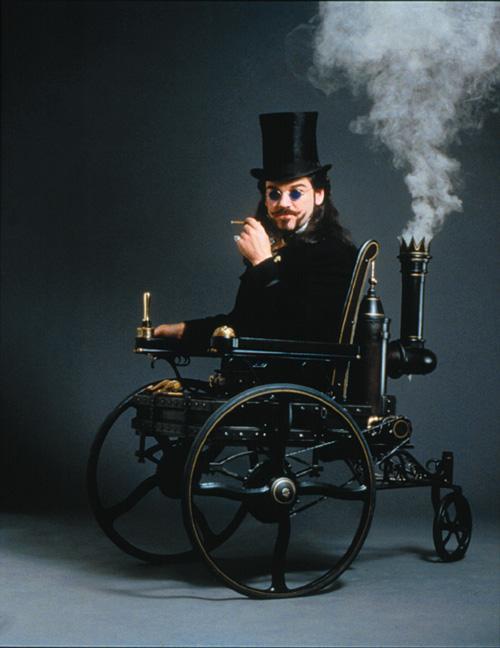
SteamPunk Design – What is it exactly?

Image

Firstly I must say that I absolutely love this genre of design. As a way of inspiring and influencing students to think creatively with their design work it is brilliant. They have to:

  • Explore design and product history fully to understand
  • Make creative decisions about the mix of aesthetics and technology
  • Look carefully at the amalgam of materials and manufacturing methods
  • Be aware of the need for combining form and function in their work
  • Provides for some really cool sketch, concept and graphics work

What more do you need?

I first became aware of SteamPunk as a consequence of watching some very entertaining (in my opinion) films – ‘Mad Max’, ‘The League of Extraordinary Gentleman‘, ‘The Wild, Wild West‘ and the ‘Fifth Element’ to name a few.

  Image   Image

But what is SteamPunk exactly?

The genre seems to have originated during the 1980s and includes key design elements and influence from the areas of sci-fi, fantasy and history.  My design students have taken a lot of influence from the genre, and have used that influence successfully in their A-Level design work, but trying to hang a summative phrase to sum up the movement is not easy.

Image    Image

Having trawled ‘t’interweb’ and looked in some books the best single phrase that sums up SteamPunk design for me is this:

‘What the 21st century thinks that the Victorians thought the 21st century would be like’

There is no doubt that the opportunity to design products that embrace this genre facilitates that ‘creative juice’ flow. Kids get it; they run with it and, to a certain extent, are not constrained over and above the historical context.

cufflinks steam punksteampunk-usb


The opportunity to explore an eclectic range of traditional materials in their work (copper, brass, steel, wood….but remember NO plastics other than to create models that represent the genre 😉 ) means any manufacturing work that you do supports the theory with regard to design and making, using tools, machines and processes to fabricate their idea. Guys and girls are all motivated (jewellery, transport, fashion, tech products…) can all be tackled.

     Image  Image  steampunk laptop

If you are looking for a starting point to kick off a project then SteamPunk is a massively fun and creative way forward.

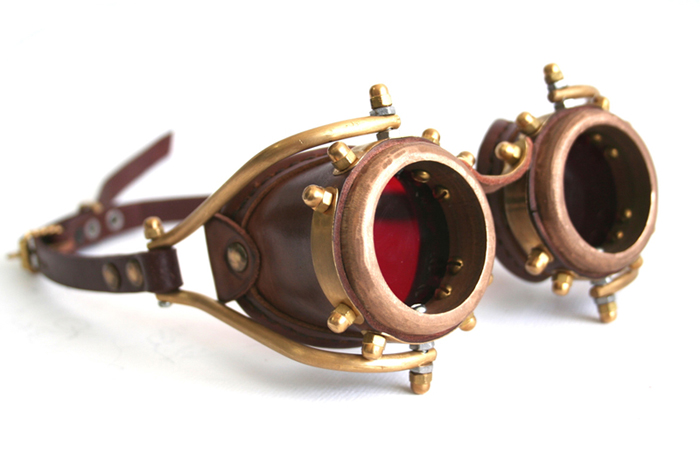
Volunteer__s_Goggles_number_2_by_AmbassadorMann

No links to key sites on this blog entry – Google is your friend. Go and have a look.

You’ll be inspired.

Who is to blame for this? The Architect or the Car Designer?

Who is to blame for this? The Architect or the Car Designer?

There is quite a storm brewing over the design of a skyscraper in London where, apparently, stray reflections of sunlight are melting vehicles parked below.  

Now, there is certainly a case for the architect to look at…and maybe this is something he had not considered (would you?). However, my bigger concern is why are luxury cars and vehicles succumbing to this? Growing up in Hong Kong, where cars were parked outside in very high heat all day (40C at times) there was no melting of car body parts or nonsense (granted, some cracked dashboards did occur…). 

My question is this. Who could you look to to blame for this? Architects and engineers not seeing the whole picture or car designers who are using cheaper materials and finishes nowadays?  I’ll be watching this story unfold.