This is a short, simple, rather cool video that I stumbled upon that offers an overview of what INDUSTRIAL DESIGN is as a creative and academic discipline.
It’s kinda groovy….and very informative. Well, I liked it so I thought I’d share it 😉

This is a short, simple, rather cool video that I stumbled upon that offers an overview of what INDUSTRIAL DESIGN is as a creative and academic discipline.
It’s kinda groovy….and very informative. Well, I liked it so I thought I’d share it 😉

Hanker. A verb. ‘Feel a strong desire to do something’.
Synonyms: yearn – crave – long – hunger – aspire – desire – covet
Have you ever ‘hankered’ after anything? If so, what?
I was gathering some pins together for my Pinterest boards and fell upon an iconic automotive design that I have adored since I first set eyes on it back in the day when watching a film with my dad. It was a car. The Ford Mustang Fastback from the film ‘Bullitt’ with Steve McQueen.
The car is iconic for so many reasons; the Ford Pony car ‘done good’, American ‘coke bottle’ design at its best (mimicked by car designs in Europe with the Cortina MK3, Escort MK1 and the Capri…); a car that satisfied the masses in America and around the globe – a genuine car for the people in all its coupe and notchback forms.
Sure it handled terribly, only went well in a straight line BUT boy, didn’t it look good?
With that V8 burble sound track (forget the asthmatic V6 version…) which made the hair on the back of your neck stand up when at full chat…The epitome of ‘cool’. Throw in the suave Steve McQueen and you had quite a mix. The film was not bad either.
Anyway. I hanker after one of these cars. I want one. I yearn for one. For me it’s like a 32 Deuce coupe, a Ferrari 412, a Nissan Skyline 240K, a Toyota 2000GT, a Riva speedboat, a Harley hard-tail. I just love the look and the style that goes with it. Retro Design at its best. Cool.
Sadly there is one catch. Money. Roll on the lottery…

Forget your iPhone, Samsung, Blackberry, Nokia, Android or what have you. This was the real deal…where it all started. Possibly 🙂
Joking aside it does make you think how the actual role of the ‘telephone’ i.e. speaker and microphone, has become very much of secondary value in a product primarily conceived for talking to each other – and that we still refer to as a ‘phone’ – even if we have added the word ‘mobile’ to it.
What next? What other technology can we drag into the mix? Cocktail shaker? Now there’s a thought…
Peter Jones Academy – Promoting Entrepreneurial Spirit
‘Learning by Doing‘. Absolutely. I stumbled across the Peter Jones Enterprise Academy via Twitter and think it is a fantastic initiative.
For those non UK folk, Peter Jones has led and developed a very successful business career in a myriad of different product and service industries rapidly becoming one of the UK’s most wealthy and influential entrepreneurs. He is also one of the established ‘Dragons’ on the UK hit TV series ‘Dragons Den’ where a panel of successful business folk have new ideas ‘pitched’ at them by aspiring (and sometimes established) entrepreneurs looking for for financial investment and support in their businesses in return for a share in their business.
Any initiative which looks to help youngsters develop their young, creative entrepreneurial aspirations and dreams by helping to forge partnerships between real life business, schools/colleges/universities, parents and the world of work gets a massive thumbs up in my book.
Don’t misunderstand me, there are many other similar initiatives out there that do excellent work too – but having read up a bit on this one it has caught my attention.
And besides, Mr Jones is far too tall a chap to argue with. Check out the link above.

I had a slightly heated, yet amicable, debate recently with a colleague I met at a conference who worked in a careers department within a school. It was over the labelling of my subject discipline (Design & Technology) as ‘soft’. I argued that my subject has come a long way since it was ‘Craft Design Technology’ (CDT in the UK) and although it retains many of its core values there have been massive developments too over the past 25 years.
Anyway, this view, expressed above, was based on the apparent thoughts held by some of the UK universities in the ‘Russell Group’ (a group of perceived ‘top’ UK universities) that certain subjects at post 16 level of study were not as ‘hard’ as others. Although my colleague and I parted on good terms (having finished off a bottle of Corbieres on the last evening of the conference if memory serves me correctly) the conversation had left me somewhat perplexed. The careers colleague I originally had the debate with had suggested that I should write something about it. So here I am. Bear with me.
Once back at my office, I discovered (sadly) that this opinion was actually upheld by a few Staff Room colleagues, parents and, to my dismay, some pupils. So, the first thing I did was to arrange a talk with my colleagues (grabbing 15 minutes in a Head of Departments meeting to give a well prepared presentation), preparing flyers to give out to parents and also giving talks to the academic scholars on ‘Design’. Their perception of the subject ‘pre-talk’ was crass and mind blowing (although not malicious…they had just not been educated about it). At least when they left they were talking about it.
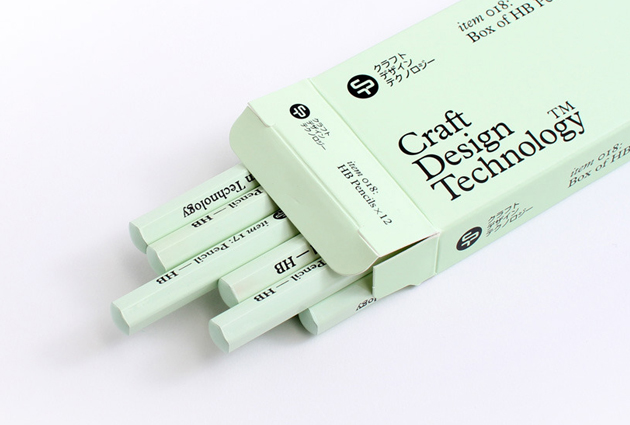
I had returned to the UK to teach having spent a decade in France, most of which was spent teaching at the International School of Toulouse – at the time the first fully lap-topped school in the Northern Hemisphere (back in 1998) where every child from 5 to 18 had a laptop (and all staff too). Along the way, I had learnt my trade as a Design & Technology teacher via the likes of Taunton School, Whitgift School and Wellington College in the UK. As an aside my enthusiasm for the subject was kindled in Hong Kong (Island School) where Design and Technology was well established and we did A-Level (it is worth noting that A-Level DT was an A-Level subject in the UK curriculum sometime before A-Level economics ever existed).
I digress. My time abroad in France was wonderful – involved with the design, build and resourcing of a brand new school using a new language, pioneering curriculum with new philosophies and teaching the IB Diploma and IGCSE qualifications with a like-minded group of pioneering teachers (neither of which I had taught before).
With regard to Design education three significant points came out of this experience for me.
Firstly I discovered how important it was to understand how the subject of Design is seen around the globe. With the IB (International Baccalaureate www.ibo.org ) Diploma, Design Technology is classed as a ‘Science’ within what is known as the ‘Group 4 Sciences’. Although this seemingly offers significant academic kudos (after all, in the eyes of many, Sciences are up there with Maths and English) I do not believe this is right. Design is not a Science anymore than it is ‘Art’. The subject of Design sits quite comfortably in-between the two and should be seen as a subject of application – an application of a range of subject skills from a variety of different disciplines (History, Languages, Art, Maths, Business Studies, Sciences…).
Art___________________________DESIGN______________________________Science
Regarding the A-Level (UK) set-up, ‘Design & Technology’ is an umbrella title that covers a suite of syllabuses that include Product Design, Graphics, Textiles, System & Control, Resistant Materials and others. That too is going through slight change as the ‘Arts’ blend more with ‘Design’
Secondly, the modern Design department is not simply about manufacture – a very stereotypical view that still seems to exist in the minds of many especially within the independent sector of education in the UK. It is as mundane as saying that Geography is only about mountains, English is only about Shakespeare and Biology is only about flowers. Sure, manufacturing is an important component BUT it is simply the significant icing on a very big cake.
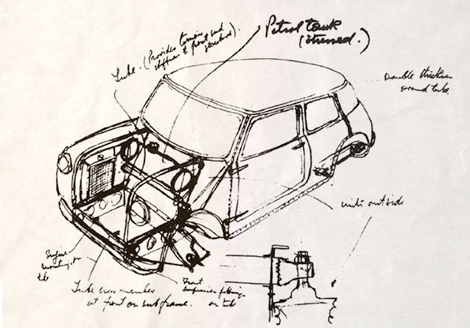
The embodiment of an idea, teaching our young to think creatively (not divergently necessarily) and enabling them to convey their ideas on paper with a pencil in sketched and noted form are absolute pre-requisites if we are to help nurture a better future – a future that embraces change, explores new ideas but also retains basic heritage and all that is good in the design of products that improve the lives of people on this planet.

A quick sketch has no linguistic boundaries; it can convey a physical attribute, an aesthetic detail, a human resource structure or an instant solution to a problem (a map to direct someone using arrows for example). The pencil sketch is the single most important skill any student can have BUT it is not the only one. Students in Design have to write essays (yes, my careers colleague seemed oblivious to this…how else do you convey your thoughts and construct your arguments on design history, the use of smart materials, the values of sustainability etcetera in product design to the world…), sit lengthy exams, produce extensive portfolios, present to clients and peers, engineer function and aesthetics into their ideas (including ergonomics, sustainability etc.), use ICT including CAD and CAM (Computer aided design and manufacture) and video, evaluate and test their ideas, write conclusions, market and cost their proposals. The course of study is significant in terms of breadth and depth.
Thirdly, I have always struggled to understand why ‘Technology’ has been bolted onto the creative and academic subject of ‘Design’. It really grates with me and is one of the reasons, I believe, why the subject of Design has been misunderstood in recent years. Certainly, in the IB the subject is called ‘Design Technology’ (no ‘and’) whilst ‘Technology’ seems to be associated only with computers…whilst at A-level it is called ‘Design AND Technology’. Go figure…no wonder there is confusion out there!
To me, all subjects in the modern curriculum use Technology (and we are not simply talking about computers or ‘ICT’ here – that is a gripe for another time) – Geography (Data loggers), Maths (Graphic calculators), Languages (podcasting), Theatre (Video) and so on…so, I reiterate, why add the word ‘Technology’ only to ‘Design’?
For those who feel that I am missing the point, and that I am not considering ‘Technology’ as an academic area of study then you just have to look at other subject content to see that technology is studied elsewhere within the modern curriculum. Physics (Mechanisms, electricity, motion, energy…) and Maths (Mechanisms, loci, energy…) are just two such examples. But we don’t call them ‘Physics and Technology’ or ‘Maths and Technology’ (although I happen to think that Science and Technology would be a far better suite of subjects in the same way that the common denominator between ‘Art and Design’ and ‘Design and Technology’ happens to be ‘Design’) so why, again, do we tag the creative and academic subject of ‘Design’ with the word ‘Technology’?
To add even more confusion into the mix the way that ‘Design’ as a discrete subject discipline is perceived around the globe only serves to add to the conundrum. In the United States there is ‘Workshop’ or ‘shop’ for manual skills (woodwork, car maintenance etc.), which is divorced from any real academic pursuit, through to ‘Technology’ in France, which from my experience tends to exist of a pillar drill on the end of a Physics bench or some electronics and soldering work. Design history? Sketching? Forget it.
 Only time will tell how the curriculum providers take this forward. There was some rebellion recently when in the UK the government tried to make some truly vacuous and infantile changes to the core ‘Design and Technology’ curriculum. Thankfully, common sensed prevailed and we, the professionals, were listened too and many problems were averted.
The ‘new curriculum orders’ for the UK are certainly a far better proposition but:
That is a blog entry for another time.
Outstanding A-Level Results at Cranleigh School, UK
Okay, I am slightly biased as for 4 years I have been working there as Design Director but some fantastic results nonetheless! Well done to all students and staff!

This summer holiday we were once again enjoying the delights of hot weather, blue skies and wonderful cool seas whilst staying at my wife’s parents place down on the coast near Perpignan in the south of France (about 20 minutes up from the boarder with Spain).
My in-laws have a lovely modest home; comfy, cool and wonderfully located. They recently had some work done to increase the outside terrace area and part of this included the fitment of a brand new stair rail for the outside steps. Two reasons for this. Firstly, to stop young grand kids from possibly stumbling through the gaps in the old design and secondly to help the in-laws (both in their 80’s) to get up and down the steps.
The problem is this.
The stair rail is made out of extruded aluminium. Looks cool BUT when you can get temperatures that regularly reach 36 Centigrade (97 Fahrenheit) and sometimes more during the day, by 10.00am you can’t touch it. In fact, you can probably fry an egg on it.
So, not only can my in-laws not use it to help them get up and down (except at night…when it’s dark…and that can be a giggle…another ‘Design fail’ thought for discussion at some point…)
I am angry at this. As a teacher of Design (and Technology) the basic requirements and needs of the customer have been ignored. They were not well advised on what material to use (given the options extruded UPVC would have been better I think) and they were also sold the most expensive option.
I am now trying to source a paint finish that can be applied to reduce the levels of conduction…
But hey, it looks cool even if it does not feel cool – ever.
Seeing this video, and then watching it again (and again) made me both very excited, and very anxious, about the future.
We have the technology – it is out there. But, for me as as a designer and teacher this clip highlighted to me the fact that our focus in schools needs to shift with regard to ‘Technology’ (a word that I admit to not liking) and we need to shift significantly.
It’s about educating kids and adults on how to interface with the technology – NOT the technology itself. I see it with my mum. She has the technology at her fingertips (TV remote) but has no clue what button does what to change the parameters for her viewing pleasure even though she thinks the picture is a bit ‘red’ (for example). She has not been taught – it is assumed knowledge by the manufacturers of the TV.
This video is brilliant. It highlights the exciting times that we are moving in but at the same time it highlights the major issues (especially with an ageing population) that many will face by simply being ‘lost’ in a world overtaken by technology and in particular user interfaces.
Kids will cope – they will grow up with it and they soak this stuff up like a sponge. But the others? Mum, dad….? How will they cope?
Many thanks to #pierslinney for sharing this video link on his blog (which is well worth a read by the way…).
Seeking a school at home or overseas? Short of time or spoilt for choice? Or need advice on choosing a university? Then this site may be of value (I have no personal involvement with this site – it just has some useful information and links on it)

Everyone at some point in their lives have encountered a product, service or ‘thing’ that simply does not work right…or at least not as the user had anticipated (or indeed as the designer had envisaged the user ‘using’ it).
We all have our own dislikes, frustrations or even hatreds for these products, services and ‘things’ that we use in our daily lives that simply don’t do what we want, as we want, when we want. On almost every level, they fail. Abysmally.
So, here is my own top ten of fails, in no particular order of merit or ‘fail’…Please add yours to my blog in the reply section below and let’s see what size of compendium we can build up on this.
For fun 😉
Predictive text. Drives me nuts. Simple words become nightmares. Names become rude slogans and its not until you have sent your message that you realise…
View original post 1,458 more words
The musings of a designer and educator
an educator's Cyber Sketches
Learning to Learn
Engage with the work that HildaRuth Beaumont and Torben Steeg are doing in D&T
One Man's Search for the Perfect Vintage Ride
ISR Discussion Boards are open to site Members & visitors alike. Your Voice Counts!
Education futures + learning how to learn
Tips, Vision & Advice on all things Education (and some other stuff too)
Humor at the Speed of Life
Apple News & Mac Rumors Breaking All Day
The TED Blog shares news about TED Talks and TED Conferences.
The latest news on WordPress.com and the WordPress community.
journey stories on why it's far more fun than marketing commodities
Welcome to Pithy Cyborg. Artificial intelligence without the artificial hype.
** OFFICIAL Site of Artist Ray Ferrer **


 Ardles - V2education