What Are The Skills Required For A Teacher Of Product Design?

Product DesignI have just answered a question on a forum I use whereby a colleague has asked what, exactly, are the skills required for a teacher of Product Design?  As someone who has taught and worked with Schools & a few Universities over 27 years delivering Product Design (and has now moved on into a consultancy capacity) I felt I could offer some thoughts based on reasonable experience.

For me, the key skills (in no particular order) are:

  • The ability to sketch with a pencil/biro on paper for me is the most important. You don’t have to be a ‘brilliant sketcher (some are, some aren’t…) but a picture really does paint a thousand words. Convey your ideas freely and spontaneously in the first instance. You can then sieve through all the ‘reality’ checks regarding manufacture, costs, health and safety etc. as you develop your concepts and ideas.
  • Modelling/prototyping and manufacture is vital.  Forget any CAM at this stage but having basic key making skills across a range of resistant (woods, metals, plastics) and compliant (paper, card, clay) materials is a requirement of the job, not incidental.
  • Don’t have a fear about the latest CAD/CAM software or latest technology. Be aware of it, have a grasp of what it can do for you then look to use part of your team to apply the bits you need. Don’t expect to be a knowledgeable user on everything.  Know what you want and drag the resources (human and other…) towards your goal. You will have skills in one or two areas but invariably as a product designer you will be, re-wording a well-known phrase slightly, ‘Jack of all trades, master of one or two possibly…
  • Take risks. Challenge the status Quo BUT be prepared to support and justify your decisions – back them up with substance.  Always ask ‘Why not?’ rather than simply ‘Why?’
  • Stay on top of communication throughout a project be it Twitter, email or phone calls. Above all else, don’t forget that ‘facemail’ i.e. talking to someone over a beer, coffee etc. is the most important part of a project and establishing a rapport with your pupils/students/clients/customers/colleagues is vital. In today’s society it is being rapidly forgotten but people skills are crucial to success.  Don’t lose them.
  • Don’t be afraid to say to a student/colleague/client simply ‘I don’t know’. On teacher training I have seen so many good practitioners trip and stumble by trying to pretend that they know an answer because they feel that they will lose face. Don’t. Be honest. You will get more respect that way. Admit you are unsure and then say ‘…however, let’s go and see what we can find out about this to try and get an accurate answer…’ Everyone learns then.
  • When using the World Wide Web to research things don’t just search in your own language. Use words from other cultures. I am still amazed when I see youngsters (and adults) gathering research by, for example, just typing in English words. Use French, Spanish (Mandarin or Japanese if you want to show off…). Chair/Chaise/silla, car/voiture/coche and so on. Not everyone writes their websites in English (or French or Spanish…). You open up a whole extra slice of the internet regarding idea generation by doing this.
  • Listen to your students/clients. Show an appreciation for what they are saying to you. Tease out the important bits of information. Never wade in directly and say to someone (especially a youngster) that their idea is stupid, silly or fantasy. You don’t have that right. Guide them, educate them, inspire them but never stamp on their ideas.
  • Above all else, enjoy what you do. As a teacher of design, irrespective of discipline, every day brings a new challenge and that is a wonderful way to work.

£30,000 Bursaries for talented Artists across the Creative Arts

£30,000 Bursaries for talented Artists across the Creative Arts

I stumbled across this link whilst I was looking for some information about design-related funding for educational initiatives.  Rather than try to re-write the article I have quoted from it below. Sounds really interesting and useful. Anything that helps to support the creative industries gets my vote. This initiative includes Music, Performing Arts, Dance, Visual Art, Creative Producing and Creative writing.

Click on the links above and below to find out more.

For the third year running Sky Arts, in association with’ IdeasTap’, is giving away five £30,000 bursaries and mentoring support to talented artists aged 18-30 from the UK and Ireland. And this year, it could be you…

Sky Arts recognises that there’s an incredible amount of young talent in the arts today, but finding a way to get your work made is an ever-present challenge – so together we’re on the lookout for five more artists to support.

The fund is designed to help emerging artists from a range of different disciplines to develop their creative practice and take their work to the next level. In addition to the £30,000 bursary, winners are also paired with relevant business and creative mentors from Sky and their industry to support them along the way.

Producer Kate Whitley, one of our 2013 Futures Fund artists, said:

“Winning the Futures Fund has been totally transformative for my work – as well as the financial support, it has offered a wealth of knowledge and experience that I would never have come across otherwise. It has completely turned the project around and helped it grow in ways that I couldn’t have even imagined!”

Porsche by Design

From the North Carolina Museum of Art:
October 12, 2013–January 20, 2014

Porsche by Design: Seducing Speed marks the North Carolina Museum of Art’s first design exhibition, exploring the history and development of the Porsche lineage from the 1930s to the present day.

Featuring more than 20 automobiles, Porsche by Design presents cars owned by Ralph Lauren, Steve McQueen, and Janis Joplin, as well as the one-of-a-kind ‘Panamericana’ concept car on loan from the Porsche Museum in Stuttgart, Germany.

Car lovers will appreciate the rarity and engineering genius of the automobiles on view. Art lovers will be intrigued by Porsche design and the connections that can be drawn with other works of art. All will gain a deep appreciation for hallmarks of the Porsche marque: beauty, artistry, technology, and innovation.

Happy 50th Birthday Porsche!

A great little video showcasing all the iconic Porsche 911 models over 50 years and ending with a ‘birthday song’ using the delicious ‘flat six’ engines as the instruments….nice.

New Website for V2Education (Vee2.com) is Live

V2Education Consultancy

At long last my new website is up and running.

Designed by an ex student of mine from some ten years ago (check out his excellent work at http://www.willpaige.co.uk) I am really pleased with the design and simple yet sophisticated interface of the site. A classic case of ‘Less is More’.

Great Job Will…Great Job…[Thumbs Up Icon]

Education and Creativity – Who needs it?

Image

The simple answer is that we all do.

But I am not talking about an ability to reel off all fifty (or sixty seven depending on what you read) European Capitals or spell the word ‘Supercalifragilisticexpialidocious’ in 10 seconds or less.

I am simply talking about the ability to apply knowledge effectively to solve problems creatively and innovate. Oh, and work with your hands – be practical. That’s important too.

ImageFor me a little knowledge applied well is of far greater use than a mountain of knowledge that resides in someone’s cranium never to see the light of day.  Many schools simply work on the ideal that ‘cramming’ is the way forward; Learning the ‘way of the exam board’ by constantly doing past papers so that technique is assumed. The aim being to avoid ‘red ink’ on your papers so you know that you have been coached through the process with apparent effectiveness? What happens if that exam paper changes the format of its questions and no one knew? A ‘two point’ marker was now obsolete and all the questions were ‘four point’ markers? Oh the shock horror of it all. It happens. The secret though is how you respond to the change – think on your feet and apply the knowledge you have gathered irrespective of how the question is phrased/set. Sadly many are unable to do that.

I often think that it would be great for everyone studying GCSE’s (a UK qualification for 15/16 year olds) to sit one exam paper in a subject. Let’s take Mathematics for example. The syllabus is set by a central agency (government possibly – like in France) and the teachers deliver that body of content as they see fit, in their own way. All the students in the country then sit the same paper at the end of two years study – a level playing field for everyone.

ImageI realise that there are countless issues with the idea (not least the financial ones relating to the various syllabus providers that make their money from ‘bums on seats’ as teachers and schools choose a syllabus for a myriad of different reasons…) but wouldn’t it sort out the wheat from the chaff regarding ability? Everyone had to answer the same maths questions – no coaching of exam paper techniques, just applying the ‘language’ of maths that they had accumulated over two years of study.

In my subject, Design (and Technology), you can’t really ‘train’ students to answer questions because invariably the outcomes are often different; unique. None are really wrong, or right – they just need justification as to why you have chosen your final idea over another; A bit like Art in many ways.

Of course there are areas of material science and engineering skills that have to be applied and learnt for the theoretical and practical parts of the course (written exam and coursework components). Not only do we have to apply that knowledge but we need to learn how to grow that talent – that is  the key to an innovative and creative outcome.

ImageThe fact that for so many the process of idea evolution as a consequence of sketching, modelling, making mistakes, communicating, evaluating and modifying to improve your idea… is alien to many… to me is very sad.

This is especially so as it is these core skills that so many youngsters are lacking; and it is these core skills that are required in the real world of work irrespective of academic (or other) discipline. 

Radical? Design Thinking? Not really; Just education.

Image

Design Education Resources

Design Education Resources

Social media communication conceptLooking for some creative inspiration with your teaching? Maybe my Pinterest Board can help you out.  Click on the link above…

SteamPunk Design – What is it exactly?

Image

Firstly I must say that I absolutely love this genre of design. As a way of inspiring and influencing students to think creatively with their design work it is brilliant. They have to:

  • Explore design and product history fully to understand
  • Make creative decisions about the mix of aesthetics and technology
  • Look carefully at the amalgam of materials and manufacturing methods
  • Be aware of the need for combining form and function in their work
  • Provides for some really cool sketch, concept and graphics work

What more do you need?

I first became aware of SteamPunk as a consequence of watching some very entertaining (in my opinion) films – ‘Mad Max’, ‘The League of Extraordinary Gentleman‘, ‘The Wild, Wild West‘ and the ‘Fifth Element’ to name a few.

  Image   Image

But what is SteamPunk exactly?

The genre seems to have originated during the 1980s and includes key design elements and influence from the areas of sci-fi, fantasy and history.  My design students have taken a lot of influence from the genre, and have used that influence successfully in their A-Level design work, but trying to hang a summative phrase to sum up the movement is not easy.

Image    Image

Having trawled ‘t’interweb’ and looked in some books the best single phrase that sums up SteamPunk design for me is this:

‘What the 21st century thinks that the Victorians thought the 21st century would be like’

There is no doubt that the opportunity to design products that embrace this genre facilitates that ‘creative juice’ flow. Kids get it; they run with it and, to a certain extent, are not constrained over and above the historical context.

cufflinks steam punksteampunk-usb


The opportunity to explore an eclectic range of traditional materials in their work (copper, brass, steel, wood….but remember NO plastics other than to create models that represent the genre 😉 ) means any manufacturing work that you do supports the theory with regard to design and making, using tools, machines and processes to fabricate their idea. Guys and girls are all motivated (jewellery, transport, fashion, tech products…) can all be tackled.

     Image  Image  steampunk laptop

If you are looking for a starting point to kick off a project then SteamPunk is a massively fun and creative way forward.

Volunteer__s_Goggles_number_2_by_AmbassadorMann

No links to key sites on this blog entry – Google is your friend. Go and have a look.

You’ll be inspired.

Who is to blame for this? The Architect or the Car Designer?

Who is to blame for this? The Architect or the Car Designer?

There is quite a storm brewing over the design of a skyscraper in London where, apparently, stray reflections of sunlight are melting vehicles parked below.  

Now, there is certainly a case for the architect to look at…and maybe this is something he had not considered (would you?). However, my bigger concern is why are luxury cars and vehicles succumbing to this? Growing up in Hong Kong, where cars were parked outside in very high heat all day (40C at times) there was no melting of car body parts or nonsense (granted, some cracked dashboards did occur…). 

My question is this. Who could you look to to blame for this? Architects and engineers not seeing the whole picture or car designers who are using cheaper materials and finishes nowadays?  I’ll be watching this story unfold.

Marketing vs. Advertising – Doing it Right in Schools…

Image

It is often the case that schools know too much about their product (education) and not enough about their customers (the parents).

There is a monumental difference between why you think someone should invest in your school and why someone does not invest.

This gap between the two is bridged by what we can refer to commonly as ‘marketing’.

Marketing. 

So what are we really talking about here?

If your first thought is advertising – ‘getting the word out’ and letting people know you exist/what you can offer them, then you may well be missing the most important point.

Let me give you an example of a School Head who was able to multiply their return on their efforts with parents by shifting that initial focus from advertising to marketing.

Paddling Without A Paddle
manager-up-the-creek-without-a-paddle1

My client, let us refer to him as ‘James’, is a colleague of longstanding who had recently taken over the Headship of a small prep school that offers a unique and diverse curriculum. He emailed me a copy of a promotional flyer he was working on. He asked for my feedback.

“So, what did you think?”  He asked.

“To be honest, I haven’t a clue.” I said.

Although a tad perturbed by my response I then asked him two critical questions:

  1. Who, exactly, are you trying to reach with this flyer?
  2. Why do you think that the main bullet points on the flyer are what your customers want to know?

James admitted that although he had a general idea of the ‘type’ of parent he was trying to reach, he didn’t have a clear answer to the second question.  His mistake is a common one.

He had made the assumption that what was important to him was also important to his clients – the parents.

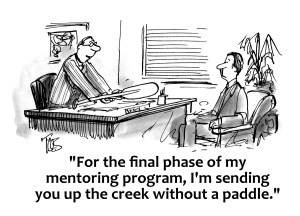
James’s boat was bobbing in the turbulent waters of the marketplace, but he only had one paddle in the water – the “advertising” paddle. As a consequence he was simply going around in circles and was in desperate need of that second paddle to even things up. We will call this the “marketing” paddle.

Marketing is that essential area of management attention that is determined through on-going observation, research, and analysis to answer key questions, questions such as:

  • Who are your customers (parents)?
  • How do they think?
  • Where are they located?
  • How do they choose which school to invest their money in?

In short, your marketing efforts drive your lead generation (advertising) by revealing what is most important to your best customers.

An Important Announcement, which carries No Value.

Consider, if you will, the idea of an audacious banner spanning the front page of the school website (or indeed hanging on the school gates…) proudly announcing that the school is “Under New Management

under-new-mgt

To a new Head, fulfilling a lifelong dream, this is an exciting and important message.

However, to a passer-by, that banner says nothing more than that there has probably been trouble in the past, an unsteady ship.  Think about it.

To a previously unsatisfied parent, that sign may deter them even more. “What? Same uncreative curriculum, delivered differently? New teachers teaching the same old stuff?”

Had more time been spent in marketing, you might have discovered that your customers are extremely interested in your expansion to ‘embrace a GCSE curriculum, your investment in new staff to cater for additional languages, the new sports hall proposals to cement stronger links with the local community…‘ and you could have more effectively used that web banner/front gate banner space to proclaim your developments.

There really is no ‘target market’ for “Under New Management.”

Clichés are exactly that; cliché

As we analysed James’s flyer, he began to see that he had created the equivalent of the “Under New Management” banner.  He had listed significant-sounding clichés that seemed to offer important benefits:  “Conveniently located,” “knowledgeable, friendly staff,” “competitive fees,” and “wide intake selection.

When we further considered where his customers were coming from, he understood that he was actually only conveniently located to some – and to others who might be his customers, he was on the wrong side of a constantly congested transport infrastructure.   And given that the alternative to “knowledgeable, friendly staff” is “unfriendly and clueless,” should his customers expect anything less?

‘Competitive fees’ might be important to his target market, but if James understands that his best customers come to him because of his ‘hard-to-find specialty curriculum in Design and Art’ or ‘excellent sporting facilities’, all things being equal fee pricing may not be of primary concern.

A key attraction to those parents looking at his school might be James’ ability to provide ‘products and services’ that are unavailable from his competitors. This is important.

  • Marketing is a collection of activities that go on internally, within your school.
  • Marketing is your on-going effort to question, observe, and understand your parents and their genuine attraction to your school.

In the rush to advertise, James ignored the most important key to effective lead generation:

Taking the time to understand what your parents care about, and how to most effectively communicate to them that you KNOW them.  

Marketing vs. Advertising

  • The marketing paddle is your understanding of who your parents are.
  • The advertising paddle is about clearly articulating the promises your school makes to them.

Effective lead generation comes from remaining hyper-aware of the balance between the two and maintaining that connection at every point of contact between you and your customers (your parents)

With proper marketing, advertising becomes a matter of broadcasting the fact that you know what your parents want and are ready to provide it.   It has to be based on what they are thinking, not what you are thinking.

Effective marketing efforts make your advertising decisions informed and strategic rather than solely based on your personal preference, happenstance, or what you see everyone else doing.  

The System of Marketing

Social media communication concept

As with any area of your school, you need a system for gathering data about your market.

There are plenty of methods out there that work; you just have to find the one that’s right for your school. Here are some examples:

  • Using appropriate social media to inform and involve your clientele is vital. For example, Twitter, LinkedIn and Facebook are currently amongst the most obvious, important and widely used. This will open channels of communication with your parents in addition to phone calls and email (see below).
  • Create and establish a website presence, electronic newsletters, blogs or physical brochures with relevant and informative content that your parents can subscribe and respond to. This will also help to open channels of communication with your parents.
  • Conduct simple surveys. There are many great resources for creating electronic surveys out there such as http://www.surveymonkey.com.
  • Install email marketing software such as http://www.newsweaver.com or http://www.littlegreenplane.com for reaching your clients. These services allow you to analyse and filter the results of your advertising efforts so you can immediately see what your clients respond to and what they don’t.

However you decide to gather this relevant data, there are some essential key questions that do need to be addressed:

  1. Who is it you are trying to attract? Why?
  2. Who are your ‘favourite’ parents currently – the ones you would like to clone?
  3. What characteristics do they all have in common?  Age, income level, geographic clusters, family status, etc.
  4. What are their lives like and how do you fit in to what appeals to them?
  5. What problems is your school and its provision going to solve for them?
  6. What is the most important message for your parents to hear from you as a Head? How will you emotionally appeal to them?

Once you ask the right questions of your parents, you’ll start getting the right answers. These answers will tell you what your parents need to hear from you in order to feel connected to you and your school.