The Layout and Design of a Modern Classroom

Image

I have been intrigued by some of the articles that have circulated recently about the ‘design’ of the ‘modern classroom’ as a consequence of ‘on-line’ learning. Well, I hate to shatter anyone’s illusions but the so called ‘on-line learning’ layout of a modern classroom goes back over twenty years to when the first lap-top equipped environments came to the fore in schools (in Australia I believe).

I was lucky enough to be involved in the design and build of a school back in 1998 which at the time was the first fully lap-topped school in the Northern Hemisphere with every child from age 4 to 18 had a lap top.  How we designed and laid out the classrooms was not simply ‘technology dependent’, but looked carefully at how a teacher and pupil actually interface – work with each other. It also looked carefully at the ergonomics of the desks, chairs and tables in relation to keyboard and screen use.

The first thing you notice with many teachers and their classrooms is that there is still exists the perceived need to have the teacher’s desk at the front with waves of pupil desks facing forwards. Then, you notice that many teachers plaster the walls at the back of the classroom with all sorts of vibrant and informative subject related material – wonderful. Except that none of the pupils can see these fantastic resources because it is behind them (and if they turn around to look they will invariably be in trouble with teacher).

Image

During my teacher training and subsequently over the past 25 years of teaching, I have seldom simply stood at the front of a class and ‘Chalked and talked’. I like to move around and to be honest the place I liked to be was at the back of the classroom. Why? Pupils behave more (they don’t know where you are but can still hear you) and when you do need to emphasize something or write on the board you move to the front and address the class ‘old school’ style.

Move forward to 1998 and with a laptop equipped classroom the layout was even more appropriate. The only addition to this was that my desk was now at the back or side of the classroom because the technology meant that my notes/presentations are projected onto a screen at the front (wherever that may be). I have control of my presentations via a small handheld presentation remote (with laser point to pick out key points as needed) and all the pupils desks face forward or inward depending on the situation BUT they have adjustable swivel chairs that allow them to adjust to the correct height for them and also move to face different areas of the classroom or indeed me. I can see all their laptop screens so it is easy to see if anyone is ‘surfing’ or somewhere that they shouldn’t be (although I also had software that allowed me to see all their screen images on my own master screen if I needed to) and the pupils are on task simply because they don’t know exactly where you are so can’t take the risk of misbehaving.

Fifteen years on my classroom is still very similar except that in addition to my electronic white board/screen I have a flip chart and a wipe clean white board to doodle on.  Also, laptops are ‘old hat’ being replaced with tablets and other devices. But I adapt accordingly. I don’t tell a pupil off for using their mobile/cell phone in my lesson if it is being used to support what I am doing with them – be that taking a photo of a design or prototype, surfing for information or talking to an industrial contact in another country.  But I am rapidly discovering that I am the exception rather than the norm.

It’s quite scary – normal learning spaces have remained the same for centuries: a rectangular box filled with rows of desks facing the teacher and writing board. As a result, today’s students and teachers suffer because these outmoded spaces inadequately support the integration of the three key elements of a successful learning environment: pedagogy, technology and space.

Change begins with pedagogy. Teachers and teaching methods are diverse and evolving.  From one class to the next, sometimes during the same class period, classrooms need change. Thus, they should fluidly adapt to different teaching and learning preferences.

Technology needs careful integration. Students today are digital natives, comfortable using technology to display, share and present information.

Space impacts on learning. According to Tony Bates of Online and Distance learning Resources:

more than three-quarters of classes include class discussions and nearly 60 percent of all classes include small group learning, and those percentages are continuing to grow”.

So where are we heading in 2013? What is the ideal classroom layout for a school? Flexibility is key.

I strongly believe in the statement that ‘we shape our environments, and our environments shape us’. Providing teachers with a flexible, well-designed learning environment is likely to encourage major changes in their delivery and method; stuffing them into rectangular boxes with rows of desks will do the opposite.

What is clear is that schools and teachers need to do some hard thinking about online learning, its likely impact on classroom teaching, and above all what kind of school experience we want pupils to have when they can do much of their studying online.

Image

SteamPunk Design – What is it exactly?

Image

Firstly I must say that I absolutely love this genre of design. As a way of inspiring and influencing students to think creatively with their design work it is brilliant. They have to:

  • Explore design and product history fully to understand
  • Make creative decisions about the mix of aesthetics and technology
  • Look carefully at the amalgam of materials and manufacturing methods
  • Be aware of the need for combining form and function in their work
  • Provides for some really cool sketch, concept and graphics work

What more do you need?

I first became aware of SteamPunk as a consequence of watching some very entertaining (in my opinion) films – ‘Mad Max’, ‘The League of Extraordinary Gentleman‘, ‘The Wild, Wild West‘ and the ‘Fifth Element’ to name a few.

  Image   Image

But what is SteamPunk exactly?

The genre seems to have originated during the 1980s and includes key design elements and influence from the areas of sci-fi, fantasy and history.  My design students have taken a lot of influence from the genre, and have used that influence successfully in their A-Level design work, but trying to hang a summative phrase to sum up the movement is not easy.

Image    Image

Having trawled ‘t’interweb’ and looked in some books the best single phrase that sums up SteamPunk design for me is this:

‘What the 21st century thinks that the Victorians thought the 21st century would be like’

There is no doubt that the opportunity to design products that embrace this genre facilitates that ‘creative juice’ flow. Kids get it; they run with it and, to a certain extent, are not constrained over and above the historical context.

cufflinks steam punksteampunk-usb


The opportunity to explore an eclectic range of traditional materials in their work (copper, brass, steel, wood….but remember NO plastics other than to create models that represent the genre 😉 ) means any manufacturing work that you do supports the theory with regard to design and making, using tools, machines and processes to fabricate their idea. Guys and girls are all motivated (jewellery, transport, fashion, tech products…) can all be tackled.

     Image  Image  steampunk laptop

If you are looking for a starting point to kick off a project then SteamPunk is a massively fun and creative way forward.

Volunteer__s_Goggles_number_2_by_AmbassadorMann

No links to key sites on this blog entry – Google is your friend. Go and have a look.

You’ll be inspired.

Who is to blame for this? The Architect or the Car Designer?

Who is to blame for this? The Architect or the Car Designer?

There is quite a storm brewing over the design of a skyscraper in London where, apparently, stray reflections of sunlight are melting vehicles parked below.  

Now, there is certainly a case for the architect to look at…and maybe this is something he had not considered (would you?). However, my bigger concern is why are luxury cars and vehicles succumbing to this? Growing up in Hong Kong, where cars were parked outside in very high heat all day (40C at times) there was no melting of car body parts or nonsense (granted, some cracked dashboards did occur…). 

My question is this. Who could you look to to blame for this? Architects and engineers not seeing the whole picture or car designers who are using cheaper materials and finishes nowadays?  I’ll be watching this story unfold.

School Open Days – What Should You Look Out For?

Image

I read an article some years ago that I bookmarked because it had some interesting points in it. The article appeared in the ‘Good Schools Guide’ and offered some advice to parents who were thinking of attending school ‘open days’.  As we look to start new terms and academic years I thought it might be prudent to revisit this topic adding from my own experience as someone who has worked in several independent schools nationally and internationally.

In reality ‘open days’ serve two purposes. Firstly to allow schools the opportunity to ‘show off’ what they have regarding facilities, campus and to a certain extent key staff (you could call it marketing opportunity) in the hope that they attract you, the paying customer, to buy in to their product.  The second purpose should be to allow prospective parents the opportunity to have a good ‘nose around’, to be able to ask key questions about the place and to facilitate the initial gathering of important information.

Independent schools pursue various open day strategies. According to the ‘Good Schools Guide’…

some aim to maintain a business-as-usual approach (Canford,) whilst others run a “cracking good day out” (Uppingham), offer flavoured milkshakes for younger siblings (Wellington) or strive towards “the look and feel of a wedding reception” (Marlborough)”.

Initial Research – Web and Social Media

Before any shortlist of possible ‘Open days’ is made (and once you have assimilated any other information you have available to you e.g. you were an ‘old boy’ of the school, your friends have kids there etc.) your initial research must start ‘on line’ first. In this day and age the School website is the equivalent to what was the main sign outside the school gates – it is the main signage point. Check out the schools web presence – what is the site like? Is it easy to navigate and get to the information you want? What do they value most on their home page? Is it all about the Head and his/her philosophies and ‘school aims & objectives’?  Is it all about sport, outdoor pursuits and music or does it flag academic achievement too? Does it grab you? Is the impression one of traditional and ‘old school’, contemporary and ‘current’ or a happy blend of ‘heritage and forward thinking’? What are YOU looking for?

Image

Also, don’t forget to check out the other social media ports of call – primarily Facebook, Twitter and Linkedin. The former is less likely to have an actual school page (but some do) whilst Twitter is certainly the most current method of circulating information by schools and it is growing all the time. Linkedin is a useful resource to gather more information about staff and can offer insight into the nature of human resources that a school has (where they came from, how long they have been there etc.).

So, once that initial research has been made…

How do you get the most out of a school open day?

  • Upon arrival, as you drive up to the gates and on through, what does your initial gut reaction tell you? Are they well kept and organised surroundings? Clear and concise directions? Pleasant and friendly ushers/guides/parking attendants?

Image

  • Once herded in (I use the term loosely) and with a glass in hand listen attentively to any of the initial talks/speeches given by the Head/Headmistress. How do they present themselves? Look around at the other staff that are present (normally Senior Management, HODs – Heads Of Departments – and House staff) and gauge their responses to the speech. Are they smiling and nodding approvingly or not paying attention and standing there disinterested? You can learn a lot from how the other staff react to their boss talking.
  • Talk to as many pupils as you can around the place. Asking them which subjects are best is not always a good call (although it will offer you some insight). If they are senior pupils they may not have come up all the way through the school and will only be studying three to five out of the fifteen or so subjects on offer. That said, do ask what they do during breaks and (if it is a boarding school) what they do in the evenings. Also, if you feel a little ‘Harry Potterish’, ask them what they would change about the school if they had a magic wand.  You can get some good responses to that.
  • Try not to judge the entire school on the basis of one shy boy or over gregarious girl who shows you around. The flip side to this is that some schools do use first or second year pupils to do tours as they offer quite a fresh and honest approach to your questioning and are not yet caught up in the deep rooted school rhetoric. If schools do this – they have confidence in what they do (Cranleigh does this for example).
  • Try to chat to some other parents at the initial drinks/refreshments upon arrival. What do you think of them? Are they ‘your kind’ of people? Would you be happy for your children to mix with theirs?  It may sound very sad but you need to be honest with yourself here. It’s a big investment and needs careful consideration, as socially there is a lot to be gained for yourselves as much as for your kids.
  • Seek out the school noticeboards. Are they well kept, neat and current? Is there a lot of diverse activity going? For example, Music, Art, Design, Theatre, Sports (including details of matches), details of chapel and pastoral care, commendations/merits and awards etc. Is there a board showing all the staff photos and department heads? Do they look happy?

Image

  • For me one of the most important (and most underused) marketing tools in a school is its loo’s. Nothing is more revealing about a school’s priorities than its lavatories. Is there information up on the walls about recent achievements (academic and sporting) up and coming events and so forth? Are they clean and fresh looking – well kept?
  • If your child will be boarding, try to get around to a couple of boarding houses at least. Admittedly most schools allow Housemasters/Housemistresses to stamp their own feel on a place so hopefully the boarding houses will have their own individual feel but do try to take a close look at the sleeping accommodation to see what it is like. Single rooms? Dormitories? Social areas? Amid all the tours, lectures and wine, this is the part of the visit most easily neglected.
  • If your child is to be a day pupil what facilities do they have (as above minus the sleeping arrangements)?
  • If you have the time don’t be afraid to wander off-piste: you’re not a pupil, nobody is going to tell you off.

Most importantly NEVER judge the school by its open day alone!

Use it solely as a starting point. You will probably be able to drop one or two off your radar at this juncture – but then you must arrange to pop back for a more personally tailored visit or one-to-one chat with the Head/Headmistress and other key staff as you, and your child, sees fit.

Remember that a school open day is the time for that first initial contact. It should give you, the parent, an initial feel for the school and provide you with enough information to be able to make some pretty important judgement calls. If you have not got what you need don’t hesitate to pick up the phone and ask.  They should be only too keen to help.

Apple’s iPhone ‘Reuse and Recycle’ trade-in program detailed, begins rolling out August 30th

A great initiative that should also be quite an astute move for apple with regard to retaining Apple iPhone users….like a good used car part exchange scheme. Interesting that it is launched now some weeks before the release of the iPhone 5S….Cynical? Moi? Jamais 😉

Marketing vs. Advertising – Doing it Right in Schools…

Image

It is often the case that schools know too much about their product (education) and not enough about their customers (the parents).

There is a monumental difference between why you think someone should invest in your school and why someone does not invest.

This gap between the two is bridged by what we can refer to commonly as ‘marketing’.

Marketing. 

So what are we really talking about here?

If your first thought is advertising – ‘getting the word out’ and letting people know you exist/what you can offer them, then you may well be missing the most important point.

Let me give you an example of a School Head who was able to multiply their return on their efforts with parents by shifting that initial focus from advertising to marketing.

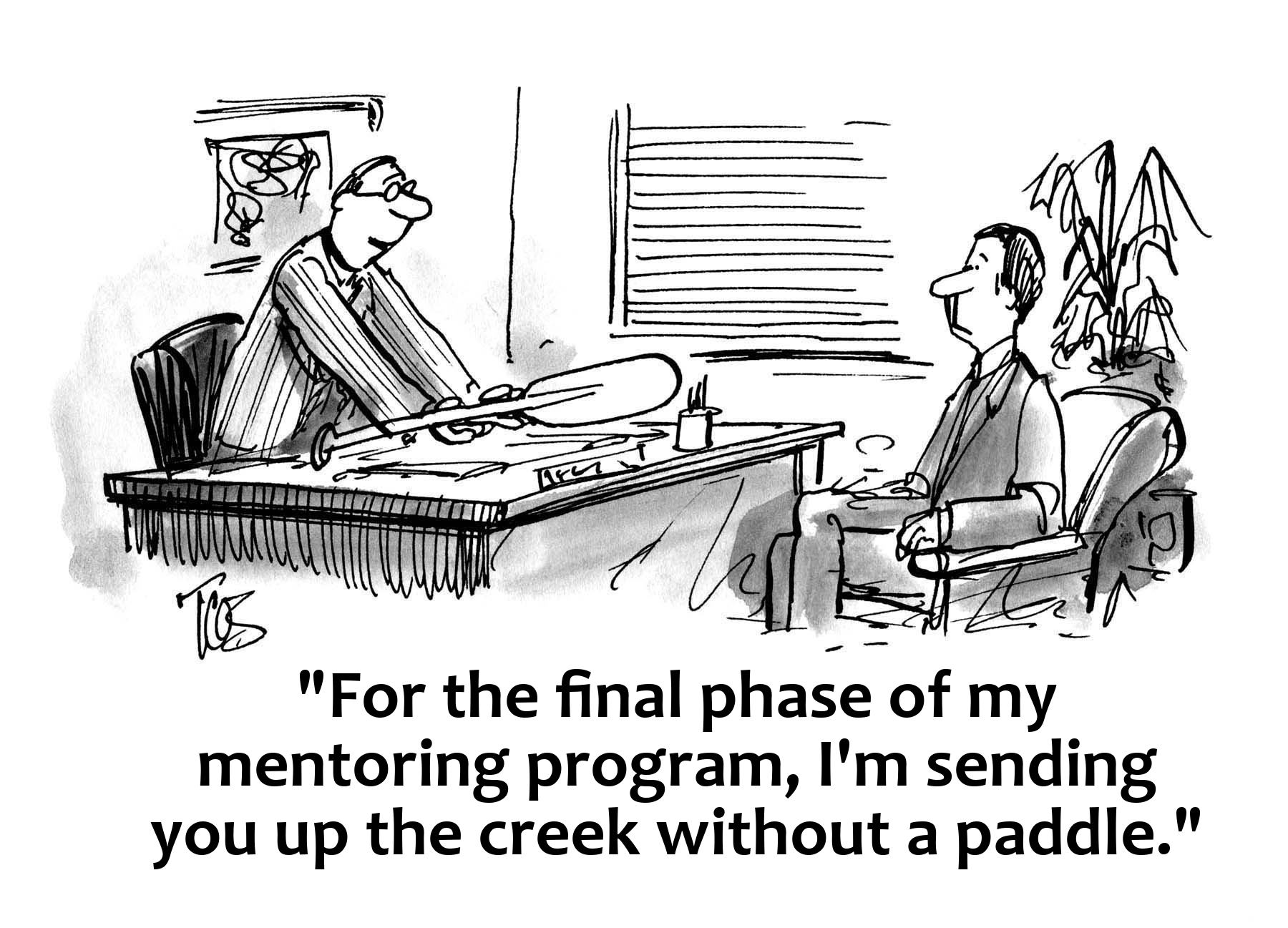
Paddling Without A Paddle

manager-up-the-creek-without-a-paddle1

My client, let us refer to him as ‘James’, is a colleague of longstanding who had recently taken over the Headship of a small prep school that offers a unique and diverse curriculum. He emailed me a copy of a promotional flyer he was working on. He asked for my feedback.

“So, what did you think?”  He asked.

“To be honest, I haven’t a clue.” I said.

Although a tad perturbed by my response I then asked him two critical questions:

  1. Who, exactly, are you trying to reach with this flyer?
  2. Why do you think that the main bullet points on the flyer are what your customers want to know?

James admitted that although he had a general idea of the ‘type’ of parent he was trying to reach, he didn’t have a clear answer to the second question.  His mistake is a common one.

He had made the assumption that what was important to him was also important to his clients – the parents.

James’s boat was bobbing in the turbulent waters of the marketplace, but he only had one paddle in the water – the “advertising” paddle. As a consequence he was simply going around in circles and was in desperate need of that second paddle to even things up. We will call this the “marketing” paddle.

Marketing is that essential area of management attention that is determined through on-going observation, research, and analysis to answer key questions, questions such as:

  • Who are your customers (parents)?
  • How do they think?
  • Where are they located?
  • How do they choose which school to invest their money in?

In short, your marketing efforts drive your lead generation (advertising) by revealing what is most important to your best customers.

An Important Announcement, which carries No Value.

Consider, if you will, the idea of an audacious banner spanning the front page of the school website (or indeed hanging on the school gates…) proudly announcing that the school is “Under New Management

under-new-mgt

To a new Head, fulfilling a lifelong dream, this is an exciting and important message.

However, to a passer-by, that banner says nothing more than that there has probably been trouble in the past, an unsteady ship.  Think about it.

To a previously unsatisfied parent, that sign may deter them even more. “What? Same uncreative curriculum, delivered differently? New teachers teaching the same old stuff?”

Had more time been spent in marketing, you might have discovered that your customers are extremely interested in your expansion to ‘embrace a GCSE curriculum, your investment in new staff to cater for additional languages, the new sports hall proposals to cement stronger links with the local community…‘ and you could have more effectively used that web banner/front gate banner space to proclaim your developments.

There really is no ‘target market’ for “Under New Management.”

Clichés are exactly that; cliché

As we analysed James’s flyer, he began to see that he had created the equivalent of the “Under New Management” banner.  He had listed significant-sounding clichés that seemed to offer important benefits:  “Conveniently located,” “knowledgeable, friendly staff,” “competitive fees,” and “wide intake selection.

When we further considered where his customers were coming from, he understood that he was actually only conveniently located to some – and to others who might be his customers, he was on the wrong side of a constantly congested transport infrastructure.   And given that the alternative to “knowledgeable, friendly staff” is “unfriendly and clueless,” should his customers expect anything less?

‘Competitive fees’ might be important to his target market, but if James understands that his best customers come to him because of his ‘hard-to-find specialty curriculum in Design and Art’ or ‘excellent sporting facilities’, all things being equal fee pricing may not be of primary concern.

A key attraction to those parents looking at his school might be James’ ability to provide ‘products and services’ that are unavailable from his competitors. This is important.

  • Marketing is a collection of activities that go on internally, within your school.
  • Marketing is your on-going effort to question, observe, and understand your parents and their genuine attraction to your school.

In the rush to advertise, James ignored the most important key to effective lead generation:

Taking the time to understand what your parents care about, and how to most effectively communicate to them that you KNOW them.  

Marketing vs. Advertising

  • The marketing paddle is your understanding of who your parents are.
  • The advertising paddle is about clearly articulating the promises your school makes to them.

Effective lead generation comes from remaining hyper-aware of the balance between the two and maintaining that connection at every point of contact between you and your customers (your parents)

With proper marketing, advertising becomes a matter of broadcasting the fact that you know what your parents want and are ready to provide it.   It has to be based on what they are thinking, not what you are thinking.

Effective marketing efforts make your advertising decisions informed and strategic rather than solely based on your personal preference, happenstance, or what you see everyone else doing.  

The System of Marketing

Social media communication concept

As with any area of your school, you need a system for gathering data about your market.

There are plenty of methods out there that work; you just have to find the one that’s right for your school. Here are some examples:

  • Using appropriate social media to inform and involve your clientele is vital. For example, Twitter, LinkedIn and Facebook are currently amongst the most obvious, important and widely used. This will open channels of communication with your parents in addition to phone calls and email (see below).
  • Create and establish a website presence, electronic newsletters, blogs or physical brochures with relevant and informative content that your parents can subscribe and respond to. This will also help to open channels of communication with your parents.
  • Conduct simple surveys. There are many great resources for creating electronic surveys out there such as http://www.surveymonkey.com.
  • Install email marketing software such as http://www.newsweaver.com or http://www.littlegreenplane.com for reaching your clients. These services allow you to analyse and filter the results of your advertising efforts so you can immediately see what your clients respond to and what they don’t.

However you decide to gather this relevant data, there are some essential key questions that do need to be addressed:

  1. Who is it you are trying to attract? Why?
  2. Who are your ‘favourite’ parents currently – the ones you would like to clone?
  3. What characteristics do they all have in common?  Age, income level, geographic clusters, family status, etc.
  4. What are their lives like and how do you fit in to what appeals to them?
  5. What problems is your school and its provision going to solve for them?
  6. What is the most important message for your parents to hear from you as a Head? How will you emotionally appeal to them?

Once you ask the right questions of your parents, you’ll start getting the right answers. These answers will tell you what your parents need to hear from you in order to feel connected to you and your school.

It’s funny how things turn out…cars, design, education or rock music?

I have had some really lovely comments back from folk who have stopped by to read a post from my blog. Thank you. 

Originally aiming to ‘drop stuff off’ mainly on design and education I have also thrown some other bits into the mix that relate to my passion for all things automotive (as can be seen from my header photo – the two toys in my life – a Caterham nee Lotus Seven and an Aprilia Moto 6.5 designed by Philippe Starck – one of my favourite designers).  I have had quite a few emails requesting some information on these two so I will be writing something about them shortly for you. In the meantime…

Lotus-Seven-Prisoner_2639185k

Image


My point for this entry is this. Although I originally wanted to share my professional experiences and passion for design education (I am a Design Teacher by trade….) there is obviously a tide of interest in my passion for petrol-head stuff.  And I can write all day on that area of study too!  My other love is good-old-fashioned-toe-tapping-Rock-music such as AC/DC, Van Halen, ZZ-Top, Chickenfoot (and loads more besides…).

Oh, and I love the cartoon character ‘Wile E Coyote‘ too…(‘Wile7 is my car forum handle). So, I will diversify a little to include more on the ‘other stuff’ whilst retaining the design education focus as well.

Below is a photo of Brian Johnson (Lead singer with AC/DC) parking his beloved 1928 4.5 Litre Bentley Touring affectionately named ‘Thunder Guts’. A great mix of rock and automotive icons 🙂

Image

Don’t forget to check out my ‘V2education Daily’ on Twitter for updated news.

Again – Thanks for reading – I really appreciate it!

Dave

Iconic British Cars on New Stamps

Iconic British Cars on New Stamps

‘Why Not Associates’ is behind the design of six new stamps for the UK Royal Mail which feature a series of British classic cars from the 1960s and 70s…

The cars for the British Auto Legends ‘Thoroughbreds’ set were sourced from various collectors from all over the UK, and photographed last year by James Mann, a specialist in car photography, in a studio in Clapham in London.

Despite the dangers of negotiating the studio space, Mann came up with six great portraits of the following cars (click on the photo to take you to the link relating to the story behind the stamps):

1961 Jaguar E-Type;
1962 MG MGB;
1963 Aston Martin DB5;
1965 Rolls-Royce Silver Shadow;
1968 Morgan Plus 8;
1976 Lotus Esprit.

I hope you like them as much as I did (although disappointed that a Lotus Seven was not included….. 😉 )

Design Council – What is Good Design?

An excellent video from the Design Council in the UK that explains succinctly what, exactly, Good Design is.

Tutorial: Sketching the side view of a car using Markers

http://www.youtube.com/watch?v=h6bBxjwctxo

I have jumped a head a bit here with this marker tutorial (not mine I might add, but one from a very good YouTube channel I subscribe too – iDCreatures). I like this though and I will post the pencil sketching tutorials I use shortly.

Sketching with a pencil on paper is a key design skill. In my teaching I spend considerable time on honing basic sketching skills in both 2D and 3D with my students – starting off as soon as I can with them.

This video shows how you can work quickly with markers and ‘sketch’ just like you would with a pencil.

Having confidence is key…confidence to make mistakes and not worry about them on the paper. I hope you like it.