
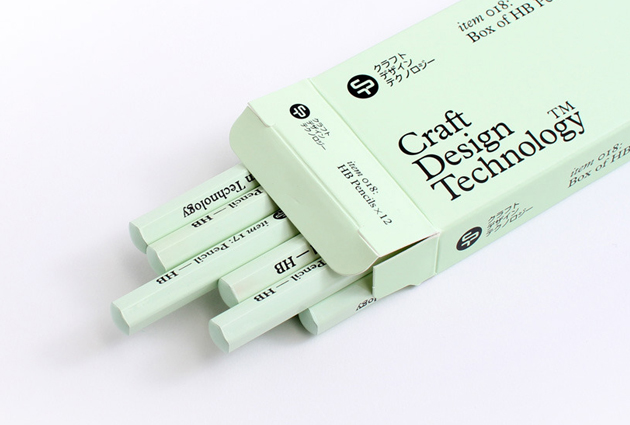
I had a slightly heated, yet amicable, debate recently with a colleague I met at a conference who worked in a careers department within a school. It was over the labelling of my subject discipline (Design & Technology) as ‘soft’. I argued that my subject has come a long way since it was ‘Craft Design Technology’ (CDT in the UK) and although it retains many of its core values there have been massive developments too over the past 25 years.
Anyway, this view, expressed above, was based on the apparent thoughts held by some of the UK universities in the ‘Russell Group’ (a group of perceived ‘top’ UK universities) that certain subjects at post 16 level of study were not as ‘hard’ as others. Although my colleague and I parted on good terms (having finished off a bottle of Corbieres on the last evening of the conference if memory serves me correctly) the conversation had left me somewhat perplexed. The careers colleague I originally had the debate with had suggested that I should write something about it. So here I am. Bear with me.
Once back at my office, I discovered (sadly) that this opinion was actually upheld by a few Staff Room colleagues, parents and, to my dismay, some pupils. So, the first thing I did was to arrange a talk with my colleagues (grabbing 15 minutes in a Head of Departments meeting to give a well prepared presentation), preparing flyers to give out to parents and also giving talks to the academic scholars on ‘Design’. Their perception of the subject ‘pre-talk’ was crass and mind blowing (although not malicious…they had just not been educated about it). At least when they left they were talking about it.

I had returned to the UK to teach having spent a decade in France, most of which was spent teaching at the International School of Toulouse – at the time the first fully lap-topped school in the Northern Hemisphere (back in 1998) where every child from 5 to 18 had a laptop (and all staff too). Along the way, I had learnt my trade as a Design & Technology teacher via the likes of Taunton School, Whitgift School and Wellington College in the UK. As an aside my enthusiasm for the subject was kindled in Hong Kong (Island School) where Design and Technology was well established and we did A-Level (it is worth noting that A-Level DT was an A-Level subject in the UK curriculum sometime before A-Level economics ever existed).
I digress. My time abroad in France was wonderful – involved with the design, build and resourcing of a brand new school using a new language, pioneering curriculum with new philosophies and teaching the IB Diploma and IGCSE qualifications with a like-minded group of pioneering teachers (neither of which I had taught before).
With regard to Design education three significant points came out of this experience for me.
Firstly I discovered how important it was to understand how the subject of Design is seen around the globe. With the IB (International Baccalaureate www.ibo.org ) Diploma, Design Technology is classed as a ‘Science’ within what is known as the ‘Group 4 Sciences’. Although this seemingly offers significant academic kudos (after all, in the eyes of many, Sciences are up there with Maths and English) I do not believe this is right. Design is not a Science anymore than it is ‘Art’. The subject of Design sits quite comfortably in-between the two and should be seen as a subject of application – an application of a range of subject skills from a variety of different disciplines (History, Languages, Art, Maths, Business Studies, Sciences…).
Art___________________________DESIGN______________________________Science
Regarding the A-Level (UK) set-up, ‘Design & Technology’ is an umbrella title that covers a suite of syllabuses that include Product Design, Graphics, Textiles, System & Control, Resistant Materials and others. That too is going through slight change as the ‘Arts’ blend more with ‘Design’
Secondly, the modern Design department is not simply about manufacture – a very stereotypical view that still seems to exist in the minds of many especially within the independent sector of education in the UK. It is as mundane as saying that Geography is only about mountains, English is only about Shakespeare and Biology is only about flowers. Sure, manufacturing is an important component BUT it is simply the significant icing on a very big cake.
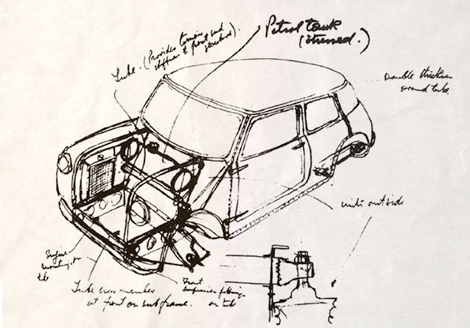
The embodiment of an idea, teaching our young to think creatively (not divergently necessarily) and enabling them to convey their ideas on paper with a pencil in sketched and noted form are absolute pre-requisites if we are to help nurture a better future – a future that embraces change, explores new ideas but also retains basic heritage and all that is good in the design of products that improve the lives of people on this planet.

A quick sketch has no linguistic boundaries; it can convey a physical attribute, an aesthetic detail, a human resource structure or an instant solution to a problem (a map to direct someone using arrows for example). The pencil sketch is the single most important skill any student can have BUT it is not the only one. Students in Design have to write essays (yes, my careers colleague seemed oblivious to this…how else do you convey your thoughts and construct your arguments on design history, the use of smart materials, the values of sustainability etcetera in product design to the world…), sit lengthy exams, produce extensive portfolios, present to clients and peers, engineer function and aesthetics into their ideas (including ergonomics, sustainability etc.), use ICT including CAD and CAM (Computer aided design and manufacture) and video, evaluate and test their ideas, write conclusions, market and cost their proposals. The course of study is significant in terms of breadth and depth.
Thirdly, I have always struggled to understand why ‘Technology’ has been bolted onto the creative and academic subject of ‘Design’. It really grates with me and is one of the reasons, I believe, why the subject of Design has been misunderstood in recent years. Certainly, in the IB the subject is called ‘Design Technology’ (no ‘and’) whilst ‘Technology’ seems to be associated only with computers…whilst at A-level it is called ‘Design AND Technology’. Go figure…no wonder there is confusion out there!
To me, all subjects in the modern curriculum use Technology (and we are not simply talking about computers or ‘ICT’ here – that is a gripe for another time) – Geography (Data loggers), Maths (Graphic calculators), Languages (podcasting), Theatre (Video) and so on…so, I reiterate, why add the word ‘Technology’ only to ‘Design’?
For those who feel that I am missing the point, and that I am not considering ‘Technology’ as an academic area of study then you just have to look at other subject content to see that technology is studied elsewhere within the modern curriculum. Physics (Mechanisms, electricity, motion, energy…) and Maths (Mechanisms, loci, energy…) are just two such examples. But we don’t call them ‘Physics and Technology’ or ‘Maths and Technology’ (although I happen to think that Science and Technology would be a far better suite of subjects in the same way that the common denominator between ‘Art and Design’ and ‘Design and Technology’ happens to be ‘Design’) so why, again, do we tag the creative and academic subject of ‘Design’ with the word ‘Technology’?
To add even more confusion into the mix the way that ‘Design’ as a discrete subject discipline is perceived around the globe only serves to add to the conundrum. In the United States there is ‘Workshop’ or ‘shop’ for manual skills (woodwork, car maintenance etc.), which is divorced from any real academic pursuit, through to ‘Technology’ in France, which from my experience tends to exist of a pillar drill on the end of a Physics bench or some electronics and soldering work. Design history? Sketching? Forget it.
 Only time will tell how the curriculum providers take this forward. There was some rebellion recently when in the UK the government tried to make some truly vacuous and infantile changes to the core ‘Design and Technology’ curriculum. Thankfully, common sensed prevailed and we, the professionals, were listened too and many problems were averted.
The ‘new curriculum orders’ for the UK are certainly a far better proposition but:
- Are they any better than what was already in place?
- Would a global approach at finding some common denominators across curriculums to help define what ‘Design’ is help the situation?
That is a blog entry for another time.








 Ardles - V2education